
 This was published in 1991, which was the year of Paul Cheeseman’s passing while he was serving as a missionary in Palmyra. As my study continues, I am still trying to figure what his mission was, and if he served at the Hill Cumorah or just around Palmyra. It would be kind of ironic being that he was part of the group that believed the Hill Cumorah in New York was the “secondary” hill.
But the few sources I have studied it almost seems that Cheeseman had a heart for the North American study of the Book of Mormon (before it was labeled the Heartland Model). AND that he was criticized for it by his peers.
As a reminder, Wikipedia says that Paul Cheeseman was an archeologist and professor of religion at Brigham Young University, and spent a lot of his time in search of Book of Mormon Evidence with that group. In fact, he is the man that appears in the video “Ancient America Speaks”, produced in 1974 where he goes all through Mesoamerica and shows the ruins and how they connect to the Book of Mormon. (One of my favorite VHS tapes to show on my mission).
What led me to this book began with an article in 1975 Ensign entitled “Transatlantic Crossings: A New Look”. First off, the Ensign rarely gets into physical evidence of the Book of Mormon, they stick to the spiritual side of things…but then, this is 1975.
In this article, Paul Cheeseman goes into a meeting of diffusionists he attended where non-Mormons, led by Dr. Joseph Mahan (who we will be writing more about in the future) all brought together evidence that there was a religious and advanced pre-Colombian presence here in North America. What threw me off about that article was not ONE lick of evidence talked about Central or Mesoamerica.
15 years later comes this book “Ancient American Indians”. The introduction reads as follows: “The author is of the opinion that students and scholars have neglected the studies of North American Indian cultures before the Spanish conquest. Some have believed North America had little to offer regarding ancient American studies because there are no magnificent stone pyramids. Therefore, the author has devoted three years to investigative, on-site studies, in over thirty five states, photographing and cataloging the better-known ruins and civilizations of pre-Columbian North America”
Now my question is WHO are these “students” and “scholars” that are neglecting North America? The ones in academia in general? Or the ones down the hall from his office? I don’t honestly know.
I do know that he got criticism for this book by his peers. His book was panned by the likes of Martin H. Raish and John L. Sorenson (main members of the Meso-club) as “a work of shoddy scholarship and hurts more then helps a true understanding of the Book of Mormon”. My question is why?
The book is simply a list of sites, artifacts and history that most of us who study the Heartland theory of the Book of Mormon already know (the Bat Creek stone, Decalogue Stone, Cahokia, etc). I have admittedly read half of it and sped-read the other half, simply because I already knew the material. Not sure how it “hurts” an understand of the Book of Mormon. Maybe because it “hurts” the Mesoamerican theory. There are plenty of Central American pieces riddled all through the book, but then again, it is a 2014 reprint of the 1991 publication.
Probably the most interesting quote I picked up was this: “It is the authors opinion that whenever there are discoveries which might possess even the slightest religious overtones, some scholars brand the research as fraudulent, simply to protect their academic reputation”. I wonder if that same fear comes to those at BYU when ever something from North America is discovered.
Go get this book!
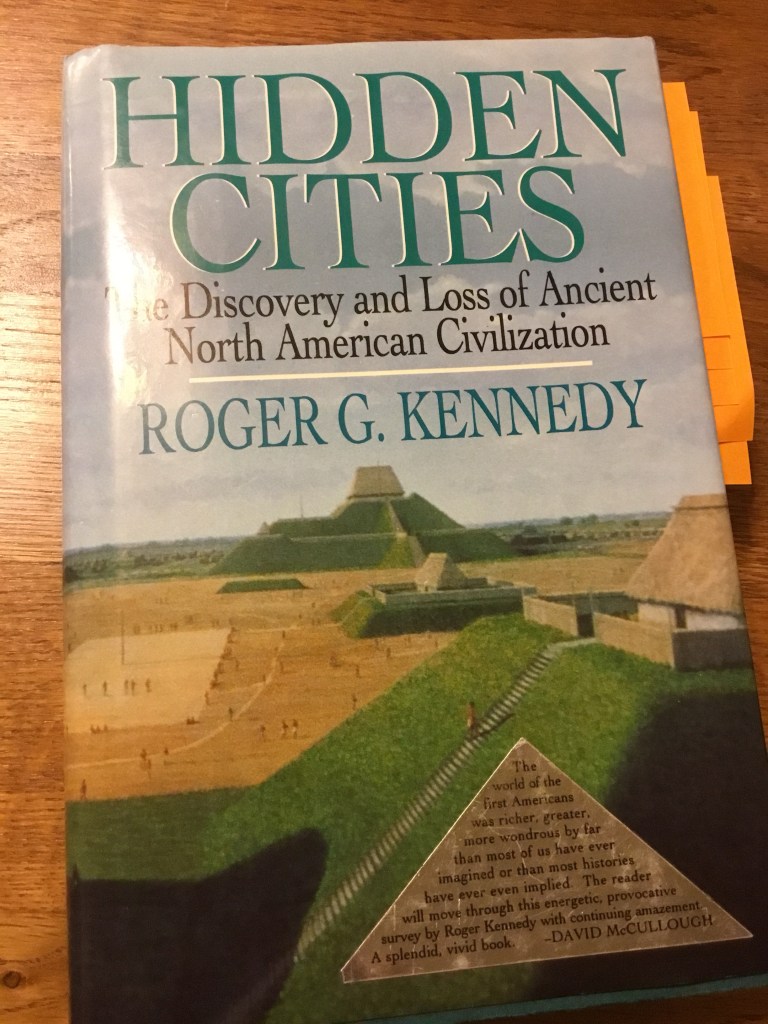

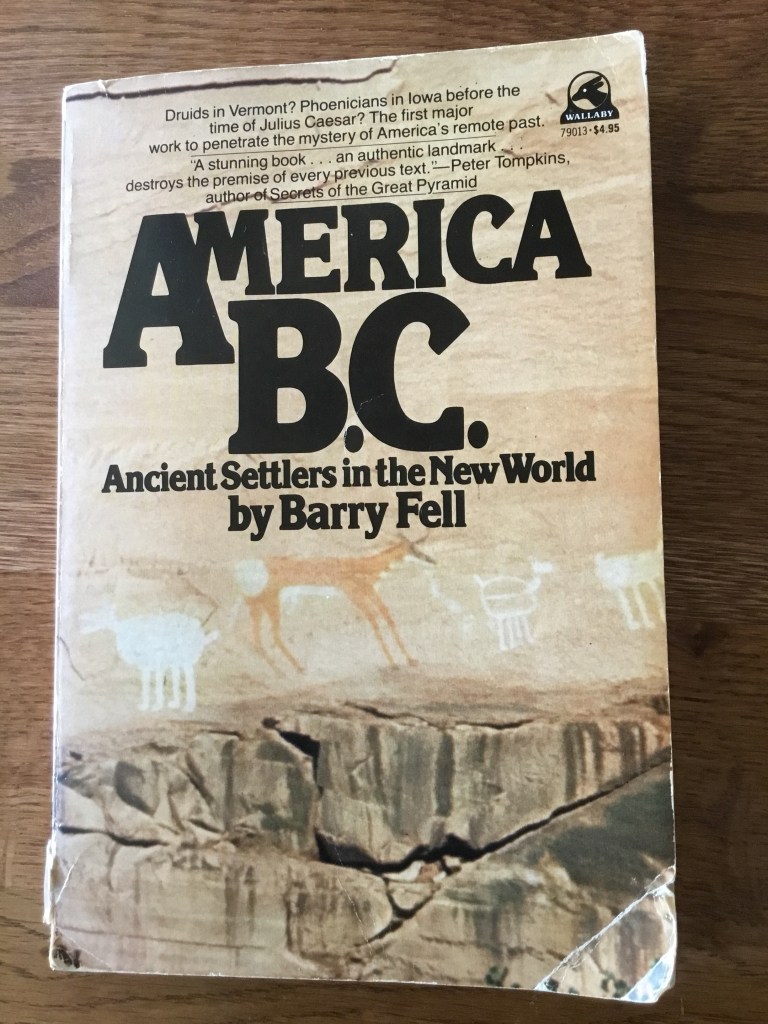 While everyone’s eyes in Book of Mormon archeology were focused in Central America, there was a time when a group of people, non-Mormon related, got together and talked about who was here in the United States before Columbus, namely diffusionists.
 This is kind of an interesting take, continuing with the search for the 2-Hill Cumorah theory. This book was written in 1959 by Riley L. Dixon. Dixon then died soon after because in this copy of the book, a program of his funeral was glued to the inner cover.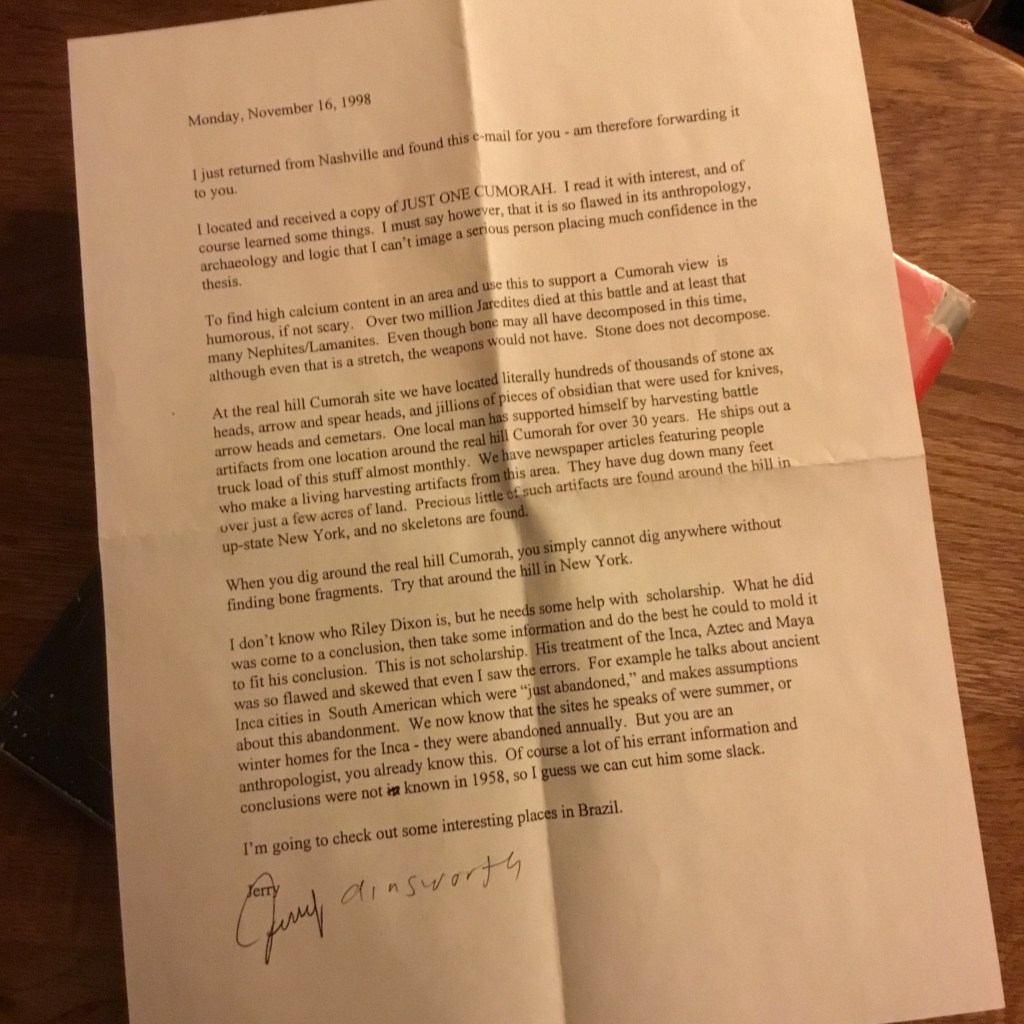
 This was an obscure little book that I found from reading other material that led me to this. Stuart Ferguson, a successful lawyer and creator of the New World Archeological Foundation, takes 73 pages to tell me why he thinks the Hill Cumorah is in Central America and NOT in New York. This book was written in 1947, which seemed to be a turning point for that theory to be cemented in the stone walls of BYU academia. It is interesting because it was not long after that that a few other publications came out AGAINST the 2-Hill Cumorah theory (which I will be featuring in future posts).
 Another thing I noticed in the 2-Hill Cumorah Theory is that it seems to have to continually be reintroduced to the public. In 1999, a video was released called “In Search of Ancient Cumorah”, which seemed to “reintroduce” the idea of a 2-Hill Cumorah theory. I am using this video as a basis for the next round of video I will be producing for Hidden in the Heartland.
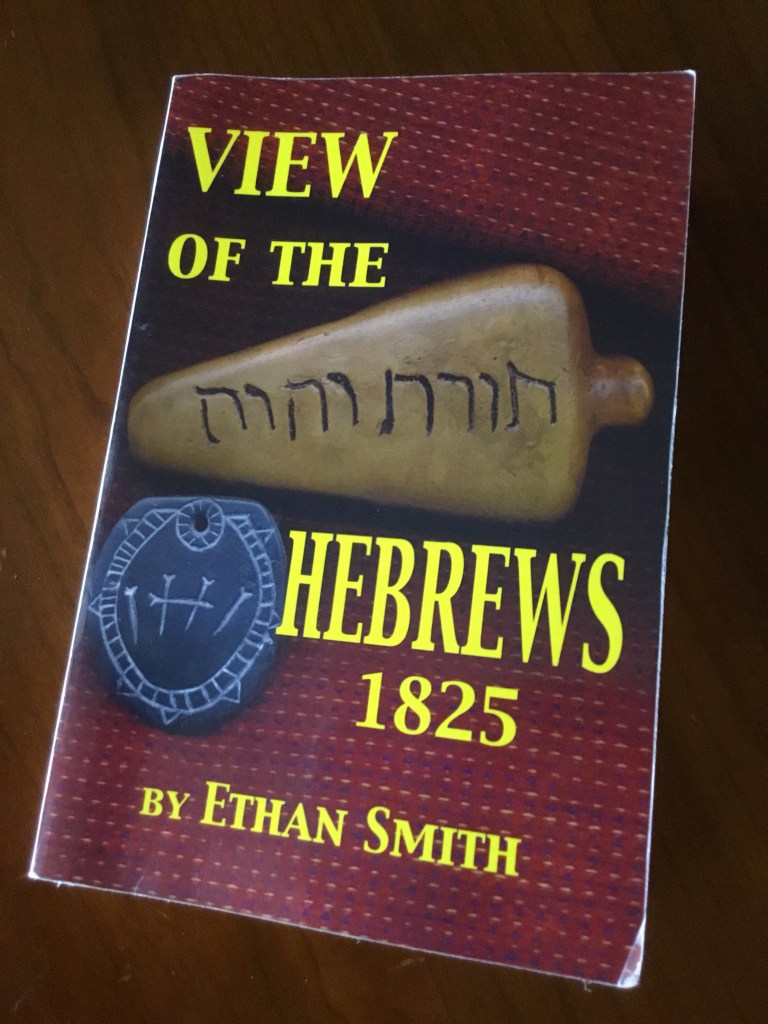 The attractive idea of this book is that is was written in 1825, by Ethan Smith (no relation to Joseph Smith). The front cover reads that Smith is a “Pastor of a Church in Poultney, Vermont”. It is interesting to read older books talking about the past. It may not be entirely accurate, but there is that chance that it is closer to the truth then what is written today.
 This book was written in 1978, which was during the peak of the Mesoamerican, 2-Hill Cumorah concept acceptance from the experts at BYU. Author and BYU archeologist Paul Cheeseman covered many concepts that focused on the possibility of the Book of Mormon events happening in Central America.
 Kels Goodman