
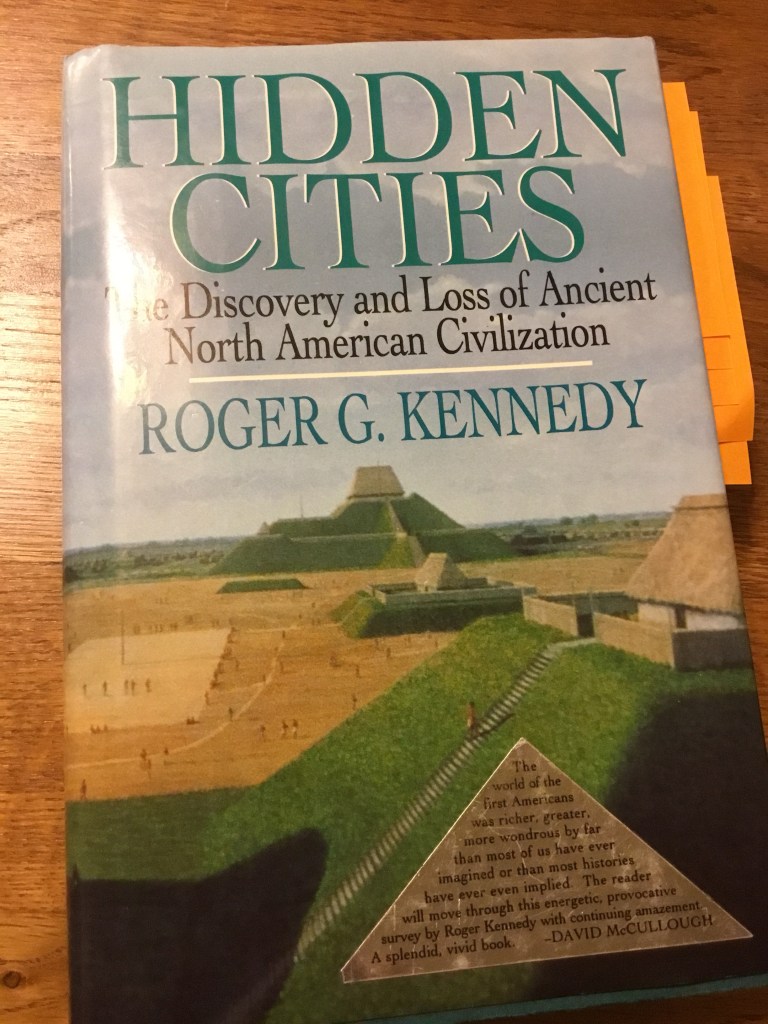
I first heard of Roger Kennedy in the film made by Steve Smoot called “Lost Civilizations of North America”. He was interviewed in the film about his knowledge of Ancient Pre-Columbian activity. He was the director of the American History Museum at the Smithsonian Institution and even in his position, was not aware of all the evidence of Ancient America till late in his career…Hence the book “Hidden Cities”.
It is a very well written and researched book, published in 1994. He is well versed in American history. And in his writing, he weaves what was going on in history when certain antiquities were found.
While he touches on the antiquities of Central and South America, he feels the United States antiquities are older and more surprising to find. He writes “Before anything so ambitious had been built in Mexico, Central or South America, earthen buildings were arranged in strict repeated geometric patters along the bayous and channels in what are now the states of Louisiana and Mississippi.”
His writing is eloquent, but he does seem to slightly “show off” with his knowledge and takes his time getting to the point of the antiquity or site or concept. Yet in reading you do have to be patient and get more of a history lesson then just a typical “list” of ancient antiquities like other books do.
Sometimes the history lessons are fun. Sometimes you want him to cut to the chase. And he does put a lot of emphasis on race and the damage done to the Native American and African American as slaves. It is all true, but if you are of European descent, you might feel like crap after a while.
I do feel Roger Kennedy was very fair in his discussions. Most of his book covers the likes of Washington, Jefferson and Jackson and their dealings with ancient American antiquities. He sites many examples that explain how treating the natives as less-then a human caused much of the antiquities to be lost. (Manifest Destiny)
My favorite section is a short couple of pages where he goes into the example of religious people who believed the natives were of a tribe of Israel. He considers these people one of the few who were actually allies of the displaced natives. It is during this section he quotes the likes of Manasseh Ben Israel, Ethan Smith and even Joseph Smith.
When taking about the Mormons view of the Natives, he gives an overall positive view of Joseph Smith and was well researched on the Book of Mormon. All through the explanation, he kept saying the Nephites were the Mound Builders (even though Smith hardly ever made the direct reference, Kennedy did it for him), and made it look more like Smith had “discovered the truth about the builders of the mounds”.
One of Kennedy’s quotes on the Mormons: “Smith became founder of the only world religion to be based in American archeology”. An interesting take on The Book of Mormon.
I overall loved this book. I loved watching Kennedy on Smoot’s documentary to begin with, but the book is very complimentary to his “old-fashioned history teacher” presence. I would have loved to have met him, but he passed not long after the making of “Lost Civilizations”. I was lucky that my copy had his autograph on it.

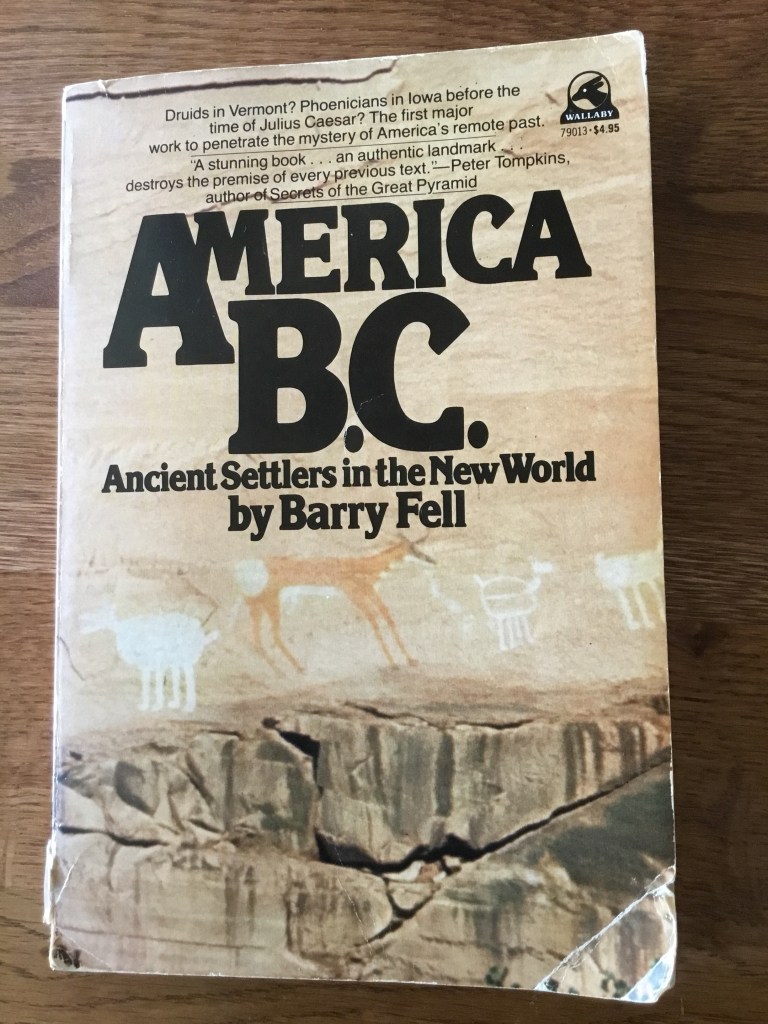 While everyone’s eyes in Book of Mormon archeology were focused in Central America, there was a time when a group of people, non-Mormon related, got together and talked about who was here in the United States before Columbus, namely diffusionists.
 This is kind of an interesting take, continuing with the search for the 2-Hill Cumorah theory. This book was written in 1959 by Riley L. Dixon. Dixon then died soon after because in this copy of the book, a program of his funeral was glued to the inner cover.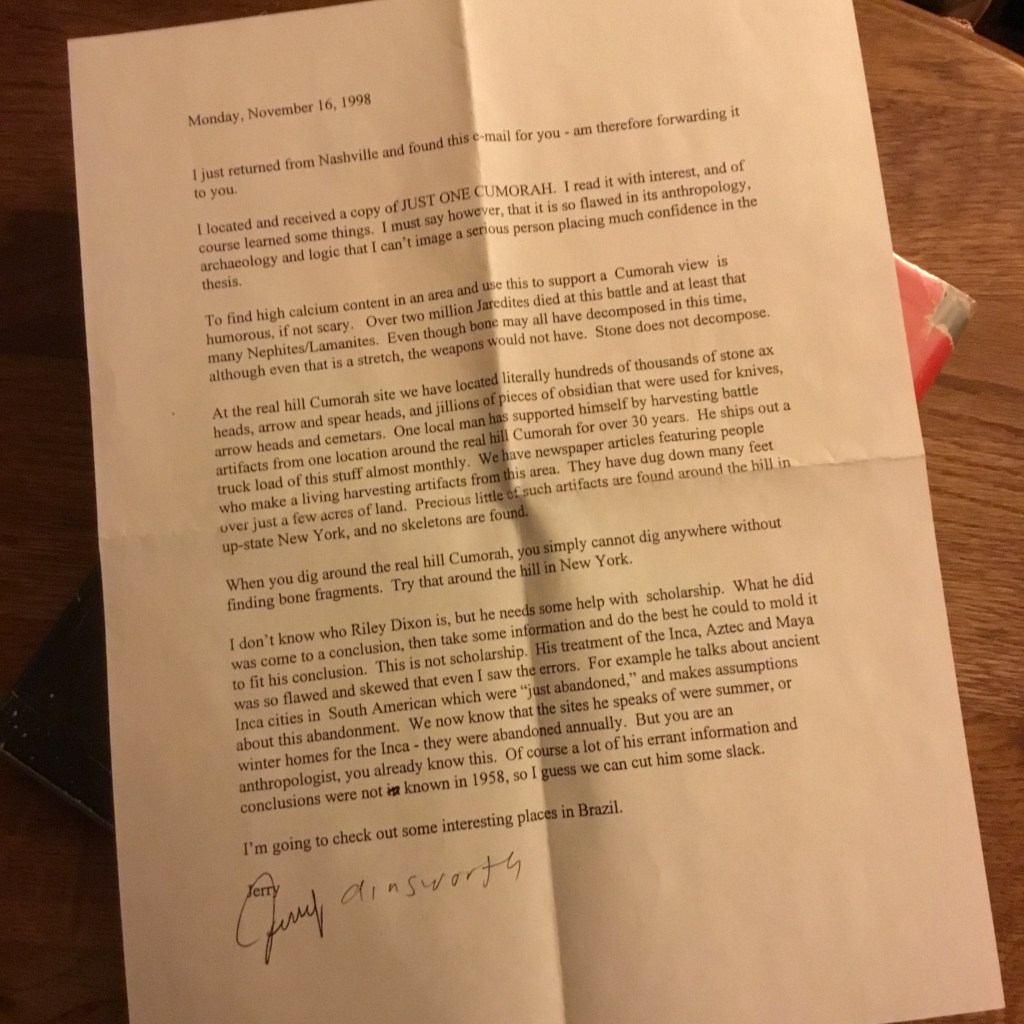
 This was an obscure little book that I found from reading other material that led me to this. Stuart Ferguson, a successful lawyer and creator of the New World Archeological Foundation, takes 73 pages to tell me why he thinks the Hill Cumorah is in Central America and NOT in New York. This book was written in 1947, which seemed to be a turning point for that theory to be cemented in the stone walls of BYU academia. It is interesting because it was not long after that that a few other publications came out AGAINST the 2-Hill Cumorah theory (which I will be featuring in future posts).
 Another thing I noticed in the 2-Hill Cumorah Theory is that it seems to have to continually be reintroduced to the public. In 1999, a video was released called “In Search of Ancient Cumorah”, which seemed to “reintroduce” the idea of a 2-Hill Cumorah theory. I am using this video as a basis for the next round of video I will be producing for Hidden in the Heartland.
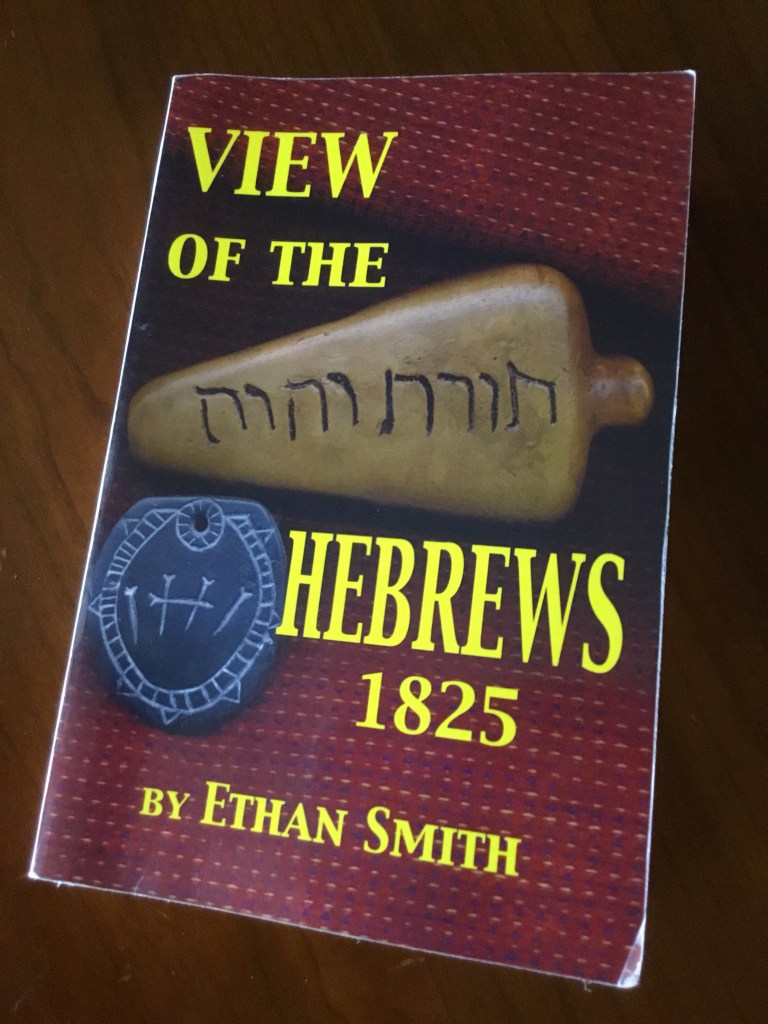 The attractive idea of this book is that is was written in 1825, by Ethan Smith (no relation to Joseph Smith). The front cover reads that Smith is a “Pastor of a Church in Poultney, Vermont”. It is interesting to read older books talking about the past. It may not be entirely accurate, but there is that chance that it is closer to the truth then what is written today.
 This book was written in 1978, which was during the peak of the Mesoamerican, 2-Hill Cumorah concept acceptance from the experts at BYU. Author and BYU archeologist Paul Cheeseman covered many concepts that focused on the possibility of the Book of Mormon events happening in Central America.
 Kels Goodman